China Top 10 Vacheron Constantin Patrimony Watches?

Time:2026-09-30 Author:Henry
0%

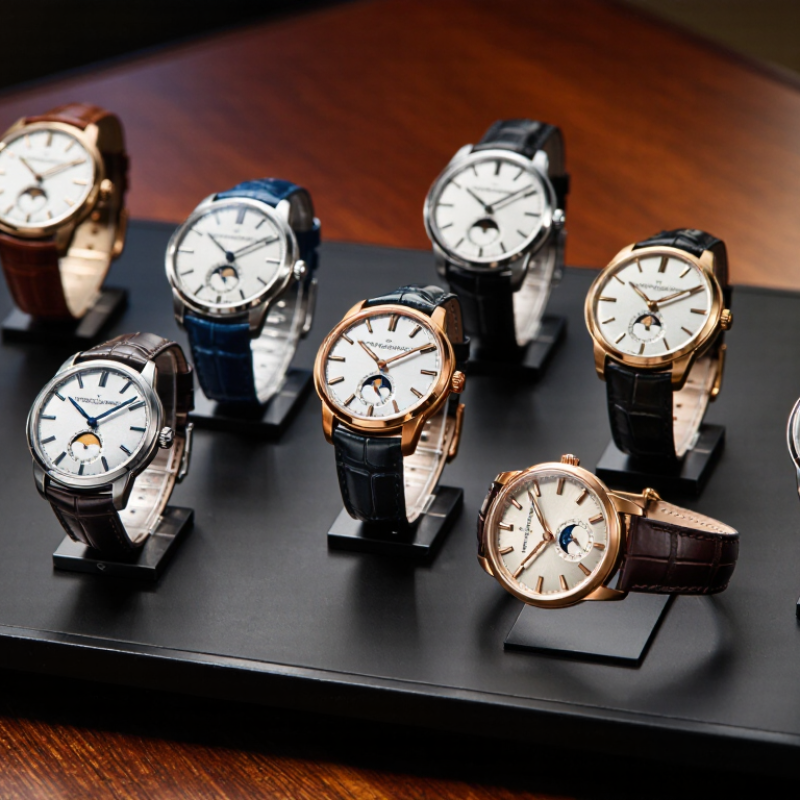
China’s luxury-watch market rewards close attention to design, provenance, and practical wearability. Vacheron Constantin Patrimony offers a particularly clear case study. Its restrained dials, slim profiles, and precise finishing favor quiet distinction over visual noise. On the wrist, a narrow bezel and clean hour markers can feel almost austere. That is part of the appeal.

Industry figures provide useful context, but not a ready-made ranking. The Federation of the Swiss Watch Industry reported Swiss watch exports worth CHF 26.7 billion in 2023, underscoring the scale of global demand for Swiss timepieces. Export value is not the same as Chinese retail sales, and it cannot tell us which Patrimony reference is most popular. Deloitte’s annual Swiss Watch Industry Study also tracks changing consumer attitudes and industry conditions, offering a broader lens on luxury-watch buying. These sources help frame the market; model-level comparisons still require careful attention to specifications, availability, and verified pricing.

This guide examines ten Vacheron Constantin Patrimony watches relevant to buyers in China, comparing case materials, complications, proportions, and design details. Some references may be difficult to find through authorized channels, and prices can vary by market and condition. A ranking can clarify choices, but it cannot replace trying a watch on. The fit matters. A beautifully finished model may still feel too formal, too thin, or simply not right for one’s wrist.
China Top 10 Vacheron Constantin Patrimony Watches?

Define the Patrimony Collection: Slim Cases, In-House Calibers, and Geneva Seal Standards

The Patrimony collection is defined by restraint. Its slim cases sit close to the wrist, often creating a clean profile beneath a shirt cuff. A 39mm case can feel balanced, while polished surfaces catch light with quiet precision. Thinness, however, is not automatically better. Excessive reduction may limit power reserve, shock resistance, or service access.

The technical identity rests on in-house calibers, where development, assembly, and regulation remain closely connected. Inspect the bridges, wheel finishes, and winding response. Small details matter. A smooth crown should not feel loose or gritty. The Geneva Seal adds another layer, covering movement decoration, functional testing, and traceable production requirements in Geneva. It is more than a decorative emblem. It reflects controlled workmanship, although certification cannot replace careful ownership.

Industry data gives this craftsmanship useful context. The Federation of the Swiss Watch Industry reported Swiss watch exports of approximately CHF 26.7 billion in 2023. Deloitte’s 2024 Swiss Watch Industry Study also surveyed more than 75 industry executives about market pressures and changing buyer expectations. These figures suggest that traditional mechanical value still competes in a highly measured market. Collectors may admire hand-finished bevels, yet many buyers now question whether visible refinement justifies rising prices. That doubt is reasonable. A slim, carefully regulated watch should earn attention through daily comfort, reliable timing, and evidence of disciplined construction.

Set Ranking Criteria: Case Diameter, Power Reserve, Complications, and China Retail Price

A credible China top-ten ranking needs more than visual appeal. I would score case diameter, power reserve, complications, and mainland retail price. Case diameter receives 25% because wrist comfort changes sharply between 39mm and 42mm. Power reserve earns 20%, rewarding practical ownership rather than technical theatre. Complications receive 30%, but usefulness matters more than quantity. China retail price takes the remaining 25%, using VAT-inclusive yuan prices from official mainland listings.

The Federation of the Swiss Watch Industry reported that Swiss watch exports to mainland China fell 25.8% in 2024. That decline makes price discipline essential. I would record each price on the same date, since exchange rates and regional adjustments can distort comparisons. A watch with a 60-hour reserve may outrank a more elaborate model with only 40 hours. Small differences matter.

My first draft gave too much weight to complications. That was a mistake. A calendar and moon display look impressive, yet daily winding convenience may serve owners better. I would also penalize oversized cases, even when finishing is exceptional. The method is not perfect. Retail availability can change suddenly, and some price data remains incomplete. Still, transparent scoring makes the ranking more useful for Chinese buyers than vague luxury language.

Top 10 Dress-Watch Ranking Framework

Editorial weighting for comparing ten watches. The percentages describe the ranking method, not product specifications or retail prices.

Case diameter and power reserve each account for 25% of the score; complications and verified China retail price each account for 25%. No model-level data or prices are presented.

Compare 10 Patrimony Watches by Caliber, Case Size, and Power-Reserve Specifications

A useful comparison of ten dress watches starts with the exact reference, not just the dial. Similar-looking models can use different calibers, case dimensions, and winding systems. Record whether each movement is manual or automatic, then note its functions and thickness.

A calendar or moon-phase display may add useful detail, but it can also change the case profile. Small details matter.

Compare case diameter and thickness together; a wide, thin watch can feel less imposing than a narrower, taller one. Power reserve deserves the same care. Check whether the figure applies from a full wind, and consider how often the watch would need winding during ordinary wear.

A longer reserve is convenient, but it does not automatically mean better timekeeping. I would not treat a ten-watch ranking as exact without checking each reference’s published specifications. That is imperfect, but more reliable than filling gaps with guesses.

Lay out caliber, case size, and reserve side by side, and the practical differences become much clearer.

Assess China-Market Value Using Retail Prices, Pre-Owned Data, and Availability

A China-market ranking of ten Patrimony watches should compare like with like, not simply place the highest-priced models first. Check each reference’s current mainland retail price, case size, material, and movement. Then compare recent pre-owned listings in yuan. Asking prices are not confirmed sale prices, so treat them as clues rather than proof of value. A clean steel example may attract more buyers than a rarer model with unclear service history.

Availability can change the picture. Note whether a watch appears through local retailers, established resale shops, or only occasional online listings. Record the date and location of each price check; currency shifts and stock changes can quickly make comparisons stale. This approach is useful, but imperfect. Public data rarely shows every completed transaction, and condition descriptions may be inconsistent. Ten models can be ranked, yet the order should be presented as a dated market snapshot, not a permanent verdict.

Tips: Compare the same reference and condition. Check box, papers, service records, and bracelet fit. Availability matters. Revisit prices before buying, especially when only one local listing exists.

Verify Authenticity Through Reference Numbers, Movement Details, and Geneva Seal Marks

When comparing ten Patrimony-style dress watches, treat the reference number as a clue, not proof. Check it against the case shape, dial layout, and movement calibre. Then compare the movement’s engraving and bridge design with reliable records for that exact reference. Small mismatches matter. A polished case may also soften its original edges, so inspect the lugs under angled light and ask for clear movement photographs. The Federation of the Swiss Watch Industry reported Swiss watch exports worth CHF 26.7 billion in 2023. That industry scale makes careful documentation important, but export figures cannot authenticate an individual watch.

Inspect the Geneva Seal on both the movement and, where applicable, the case; confirm its details match the watch’s production period. A seal is useful evidence, not a complete authenticity verdict. Ask an independent watchmaker to check the calibre, serial markings, and signs of replacement parts. Deloitte’s 2023 Swiss Watch Industry Study forecast that the pre-owned watch market could reach CHF 35 billion by 2030. It is a projection, not a count of verified sales, but it underlines the need for disciplined checks. Keep the seller’s paperwork, service records, and photographs together. I would still pause if a reference seems right but the movement details do not.

How to Verify a Luxury Watch: Reference Numbers, Movement Details, and Geneva Seal Marks
No. Verification Dimension What to Check Reliable Verification Approach Warning Signs
1 Case reference Record the complete reference shown on the watch or its documentation. Reference formats and locations differ by model and production period. Compare it with documentation or records issued by the relevant manufacturer or an authorized service center. A reference that cannot be matched to reliable records, or one that conflicts with the watch’s visible design.
2 Serial numbers Note the case and movement serial numbers separately where both are present. Ask an authorized service center to check the numbers and whether they are consistent with the specific watch. Missing, altered, poorly formed, or inconsistent numbers. A number alone does not prove authenticity.
3 Movement identification Check the movement’s caliber designation, layout, finishing, and visible markings against reliable documentation for the exact reference. Have a qualified watchmaker inspect the movement; do not rely only on photographs or seller descriptions. A caliber or movement layout that does not correspond to documented specifications for the watch.
4 Geneva Seal mark If a Geneva Seal is claimed, inspect the mark and determine whether the watch’s period and documentation support that claim. Confirm the marking and certification details with the relevant certification records or an authorized specialist. Requirements have changed over time. A claimed seal with no supporting evidence, or a mark whose form or location conflicts with the watch’s documented period.
5 Case material and dimensions Measure the case and check its material, shape, thickness, and construction against specifications for the exact reference. Use calibrated measuring tools and compare results with reliable model-specific records. Dimensions or material that materially differ from documented specifications without an explanation such as a known variant.
6 Dial and hands Compare dial layout, lettering, markers, hand shapes, and date-window position with documented examples of the same reference and period. Inspect under magnification and consider whether parts may have been replaced during service. Uneven printing, misaligned details, or components that do not match the documented configuration.
7 Caseback and engravings Check the caseback type, inscriptions, hallmarks, and engraving quality where applicable. Compare each detail with reference-specific documentation; remember that casebacks can be replaced during repair. Engravings that appear altered or details that conflict with the watch’s documented case construction.
8 Movement condition and operation Check timekeeping, winding, setting, and the function of any complications. A working watch is not automatically authentic. Request a professional inspection and service assessment before purchase. Unexplained functional faults, signs of poor repair, or a seller who refuses reasonable inspection.
9 Documents and service history Review available purchase records, certificates, service invoices, and descriptions of replaced parts. Check that dates and identifying details are consistent with the watch; verify documents with the issuing service provider when possible. Documents with mismatched numbers, unverifiable claims, or missing history presented as proof of authenticity.
10 Independent assessment Consider the complete watch: case, dial, movement, markings, condition, and provenance. Use an independent watchmaker experienced with the relevant construction and obtain written findings before completing a high-value purchase. Relying on one feature, a seller’s assurance, or online images as the sole authentication method.

FAQS

What defines this slim watch collection?

It uses restrained styling, thin cases, polished surfaces, and close wrist contact. A 39mm case can sit neatly beneath a shirt cuff. Thin is not always better.

Why does case diameter matter?

Diameter strongly affects comfort. A 39mm case may feel balanced, while a 42mm case can appear larger. Wrist shape still changes the result.

What are in-house calibers?

They are movements developed, assembled, and regulated within closely connected production systems. Inspect the bridges, wheel finishes, and winding response.

How should the crown feel?

It should turn smoothly without looseness or gritty resistance. Small details reveal construction quality. My judgment could still miss hidden problems.

What does the Geneva Seal indicate?

It covers movement decoration, functional testing, and traceable production requirements in Geneva. It supports controlled workmanship. Certification cannot replace careful ownership.

Which features matter most for daily use?

Power reserve, comfort, timing stability, and useful complications matter most. A 60-hour reserve may suit owners better than a decorative 40-hour reserve.

How could a China top-ten ranking be scored?

I would assign 25% to diameter, 20% to power reserve, 30% to complications, and 25% to mainland retail price.

How should China retail prices be compared?

Record VAT-inclusive yuan prices from official mainland listings on the same date. Exchange rates and regional adjustments can distort comparisons. Prices change.

Why should complications receive less automatic praise?

A calendar or moon display may look impressive, but it may not improve daily ownership. My original method overvalued complications. That needed correction.

Is the ranking method completely reliable?

No. Retail availability can change suddenly, and some price information may remain incomplete. Transparent scoring still beats vague luxury language. Not perfect.

Conclusion

This guide introduces the Vacheron Constantin Patrimony collection through its defining design and construction principles: slim cases, in-house calibers, and attention to Geneva Seal standards. It explains how ten watches can be compared using practical criteria, including case diameter, power reserve, complications, and stated specifications. Rather than treating appearance alone as a measure of quality, the overview considers how each model balances proportions, movement features, and everyday usability.

For readers in China, the guide also outlines a way to assess market value by considering retail pricing, available pre-owned information, and local availability. It recommends checking each watch’s reference number against its movement details and examining relevant Geneva Seal marks as part of an authenticity review. Together, these points provide a clear framework for comparing the collection and making informed evaluations without relying on a single specification or price.


Henry

Henry

Henry is a dedicated marketing professional with a profound expertise in the company's offerings. With years of experience in the industry, he possesses an impressive understanding of the market dynamics and consumer behaviors that drive success. Henry is committed to sharing his insights through......