Choosing among the 7 Best Vacheron Constantin Overseas Watches to Buy requires more than admiring a polished bezel. The Overseas collection combines Geneva craftsmanship, travel-ready design, and practical bracelet engineering. On the wrist, details matter: the Maltese-cross links should articulate smoothly, the clasp should close without pressure, and the blue dial should remain legible under changing light.
Market evidence supports careful selection. The Federation of the Swiss Watch Industry reported Swiss watch exports of approximately CHF 26 billion in 2024, despite a year-on-year decline. That result shows resilience, but it also signals a selective market. Buyers are no longer evaluating prestige alone. They are comparing movement finishing, service access, production rarity, and long-term wearability.
Deloitte’s Swiss Watch Industry Study 2024 also emphasizes brand trust, quality, and heritage as major purchase influences. Morgan Stanley and LuxeConsult’s 2024 analysis further illustrates how concentrated the high-end mechanical-watch market remains. These reports do not prove that every Overseas reference will appreciate. No honest guide can promise that.
My approach is practical. I consider case proportions, caliber architecture, bracelet versatility, complications, and ownership costs. I also recognize personal bias. A complicated model may impress collectors, while a simple three-hand version may serve daily wear better. Taste is rarely objective.
Seven references stand out for different reasons. Some offer the strongest all-round balance. Others reward patience, careful servicing, or a preference for understated luxury. Before buying, verify the reference, condition, warranty, and service history. A beautiful watch can still be the wrong watch.
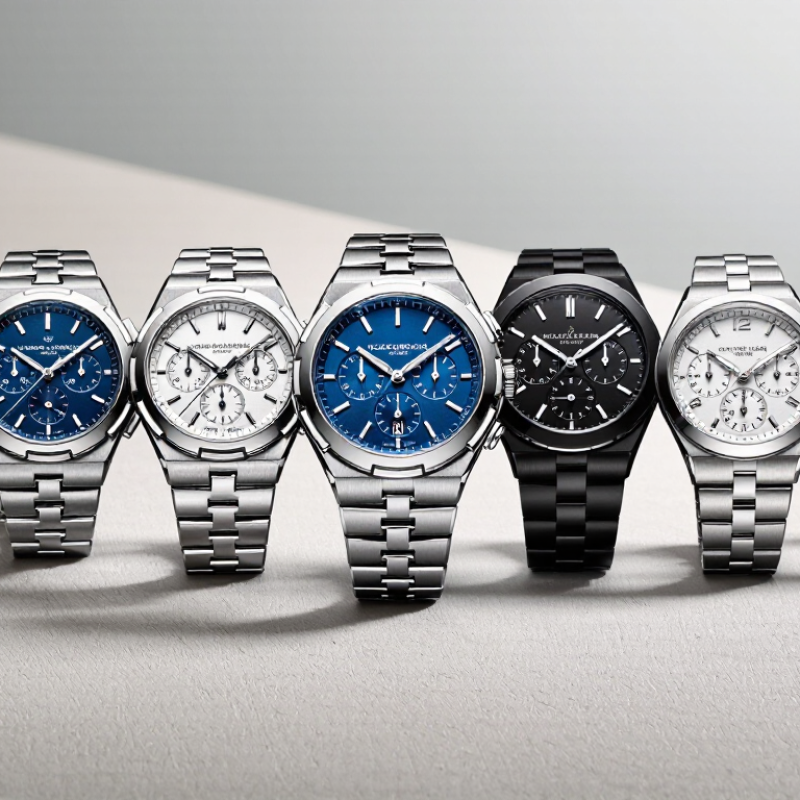
The Overseas-style watch emerged from the late twentieth century’s demand for elegant sports watches. Its formula remains recognizable: an integrated bracelet, a practical steel case, and a refined travel character. Historical continuity matters, but it can mislead buyers. Older examples may offer stronger design identity, while newer versions often improve water resistance and bracelet adjustment.
A careful seven-watch selection should examine movement architecture, case finishing, dial legibility, and service access. Look closely at the bracelet transitions. Sharp edges should feel deliberate, not fragile. A useful test is simple: wear the watch for several hours. Does the clasp pinch? Does the polished surface collect marks immediately? According to Morgan Stanley and LuxeConsult’s 2024 Swiss watch industry report, Swiss watch exports reached approximately CHF 26 billion in 2023. That scale supports market confidence, but it does not prove every model deserves its price.
Independent market data also shows collector preferences shifting toward recognizable design, documented provenance, and wearable dimensions. The 2024 Deloitte Swiss Watch Industry Study reported continued interest in luxury watches among younger buyers, alongside stronger scrutiny of value and transparency. That should influence the shortlist. Prioritize complete service records, original components, and a movement that a qualified specialist can maintain. A beautiful dial is not enough.
Some choices remain subjective. That is the uncomfortable part. Titanium may feel technically superior, yet steel can provide more reassuring weight. A blue dial photographs well, but a silver dial may age more gracefully. Treat the final seven as informed comparisons, not permanent rankings.
This chart presents an editorial weighting model for evaluating seven standout integrated-bracelet sports-watch configurations. The criteria reflect practical buying considerations: design identity, movement quality, wearing comfort, everyday versatility, water resistance, long-term desirability, and value retention. The percentages represent the relative importance assigned to each factor, not sales or company performance.
A 41mm integrated sports watch can look balanced, not oversized. Its broad bracelet spreads weight across the wrist. The slim profile also helps it slide beneath a shirt cuff. In hands-on comparisons, case shape often matters more than diameter. Still, wrist size changes everything. A 41mm case may feel compact on a wide wrist, but imposing on a narrow one.
The 150m water-resistance rating adds practical confidence for swimming and daily exposure. It does not automatically make the watch a professional dive instrument. ISO 22810 testing covers water resistance, while ISO 6425 demands additional dive-watch requirements. That distinction is easy to miss.
The Federation of the Swiss Watch Industry reported Swiss watch exports of about CHF 26 billion in 2024. That scale reflects strong demand, but expensive watches still require careful ownership. A 60-hour power reserve can keep the movement running through a relaxed weekend. It reduces reset time after Friday evening, especially for collectors rotating several watches. However, reserve length does not replace regular servicing.
Tips: Check the crown and case-back seals every few years. Rinse salt or chlorine with fresh water. Avoid pressing pushers underwater. Before buying, measure your wrist and inspect the bracelet clasp. I would also test the dial in low light. Legibility can disappoint despite excellent finishing.
The seven strongest choices should combine comfortable 41mm proportions, credible 150m protection, and a dependable 60-hour reserve. Design alone is not enough.
For a seven-watch Overseas shortlist, divide the collection by actual use. Three core time-only models suit daily wear, with clean hour markers, date windows, and integrated bracelets. Two chronographs add a practical stopwatch, but their crowded dials demand stronger lighting. Two dual-time models help frequent travelers track home and local time without using a phone. Keep it simple.
The Federation of the Swiss Watch Industry reported Swiss watch exports of about CHF 26.0 billion in 2024, down 2.8% from the previous year. That decline makes disciplined buying more important. A time-only model often offers the clearest value because it has fewer moving parts and lower service complexity. Look for a robust automatic movement, a screw-down crown, and at least 100 metres of water resistance. These details matter beside a hotel pool, not only in a showroom.
Chronographs should have legible elapsed-minute scales and firm pushers. Dual-time watches need an intuitive second-time-zone display, especially during rushed airport changes. Independent reports from Deloitte’s Swiss watch industry research also show a more cautious market outlook, with buyers paying closer attention to value and long-term desirability. Still, resale data can mislead. Trends change quickly. I would inspect bracelet articulation, clasp adjustment, service records, and case polishing before trusting a reputation. A beautiful dial cannot repair careless ownership.
Choosing among seven Overseas watches requires more than comparing case sizes or dial colors. The caliber should match your daily habits. A slim automatic movement suits office wear and formal sleeves. A robust self-winding caliber feels better for travel and frequent use. Check its power reserve, winding efficiency, finishing, and service access. A longer reserve is useful, but it may increase movement thickness.
The Geneva Seal adds an important layer of quality control. It evaluates decoration, construction, and functional performance under strict standards. Look closely at the bridges, polished edges, jewel settings, and engraved markings. These details should remain clean under magnification, not merely attractive in photographs. Still, certification does not guarantee perfect ownership. A finely regulated watch can lose accuracy after shocks or long periods without service.
Complications should serve a real purpose. A date display is practical, while a chronograph helps measure short intervals. A dual-time function can support frequent travelers, but its controls must feel intuitive. The bracelet system also deserves close inspection. Integrated links should articulate smoothly and sit flat against the wrist. Quick-release mechanisms are convenient, though some feel less secure than traditional screws. I may be overvaluing convenience here. A secure clasp matters more than a fast strap change. Try each watch with the bracelet and an alternate strap, if available. The right choice is the one that balances movement character, certified standards, useful complications, and comfortable daily wear.
Choosing among the seven best integrated-bracelet sports watches requires more than comparing dial colors. Retail pricing gives you a useful baseline, but availability, taxes, and waiting periods can change the real cost. A pre-owned example may sell below retail, while a rare configuration can command a premium. Check recent completed sales, not optimistic listing prices.
Secondary-market demand matters if you may sell later. Steel cases, versatile blue or black dials, and complete bracelet links usually attract broader interest. However, popularity should not replace personal judgment. A watch that looks impressive online may feel heavy on your wrist. Try it for several minutes. Small discomfort becomes expensive regret.
Service history deserves close attention. Ask for dated invoices, pressure-testing records, and details about replacement parts. A clean movement is valuable, but polishing can soften case edges and reduce originality. Authenticity checks should include the serial number, movement finishing, dial printing, clasp, and warranty documents. Compare every detail with reliable reference photographs or an independent specialist’s report. Do not rely on packaging alone.
Be cautious with unusually cheap offers. They often hide missing links, aftermarket parts, or unclear ownership history. No checklist is perfect. I would leave room for uncertainty, especially when the seller pressures you to pay quickly. A strong purchase combines fair pricing, documented care, believable provenance, and a design you will still enjoy after the novelty fades.
| Watch Profile | Typical Retail Price (USD) |
Typical Secondary-Market Range (USD) |
Market Position | Service Planning | Authentication Priorities | Best For |
|---|---|---|---|---|---|---|
| 1. Three-Hand Automatic, Steel | $26,000–$31,000 | $20,000–$28,000 | Usually trades below retail; strong entry-level liquidity | Full service about every 5–7 years; budget approximately $1,000–$2,000 | Movement reference, case finishing, bracelet geometry, serial consistency, and service records | First-time buyers seeking the most practical daily option |
| 2. Date Automatic, Steel | $28,000–$33,000 | $21,000–$30,000 | Broadest buyer appeal; value depends heavily on dial and condition | Full service about every 5–7 years; budget approximately $1,100–$2,100 | Date-wheel alignment, quick-set operation, dial printing, hands, and bracelet stretch | Buyers prioritizing versatility and easier resale |
| 3. Large-Date Automatic, Steel | $30,000–$36,000 | $23,000–$33,000 | Moderate-to-strong demand; condition and completeness are decisive | Full service about every 5–7 years; budget approximately $1,200–$2,300 | Date-disc alignment, correct crown action, movement architecture, and polishing quality | Collectors wanting a more distinctive dial-side complication |
| 4. Chronograph, Steel | $34,000–$42,000 | $25,000–$38,000 | More volatile pricing; lower liquidity than simple three-hand models | Full service about every 5–7 years; budget approximately $1,500–$3,000 | Chronograph reset to zero, pusher feel, sub-dial spacing, movement serials, and water-resistance test | Buyers who value mechanical complexity over maximum resale speed |
| 5. Dual-Time, Steel | $36,000–$44,000 | $27,000–$40,000 | Strong specialist demand; price varies with dial, age, and completeness | Full service about every 5–7 years; budget approximately $1,400–$2,700 | Second-time-zone hand synchronization, correct city or day-night display, and movement condition | Frequent travelers and buyers seeking practical functionality |
| 6. Precious-Metal Automatic | $45,000–$65,000 | $32,000–$58,000 | Smaller buyer pool; metal value provides a partial downside reference | Full service about every 5–7 years; budget approximately $1,300–$2,700 | Metal purity, case-weight consistency, hallmarks, replaced parts, and excessive polishing | Collectors seeking a dressier interpretation of an integrated-bracelet design |
| 7. Perpetual Calendar or High Complication | $85,000–$125,000+ | $60,000–$115,000+ | Highly condition-sensitive; specialist market and slower resale | Full service about every 5–7 years; budget approximately $3,000–$7,000+ | Calendar-change sequence, leap-year indication, moon-phase accuracy, movement originality, and specialist inspection | Experienced collectors comfortable with higher ownership costs |
Buying note: Prices are indicative U.S.-dollar ranges for comparable unworn and pre-owned examples and can vary by region, production year, dial configuration, condition, accessories, taxes, and seller reputation. Confirm the current retail quote, service estimate, and authentication status before purchase.
Match the caliber to your routine. A slim automatic movement suits office sleeves and formal clothing. A stronger self-winding movement supports travel and frequent use. Check power reserve, winding efficiency, finishing, and service access.
Not always. A longer reserve can be convenient during weekends. However, it may increase movement thickness. Wrist comfort still matters more.
It assesses movement decoration, construction, and functional performance. Inspect polished edges, bridges, jewel settings, and engraved markings. These details should remain clean under magnification.
No. A certified watch can lose accuracy after shocks or long service intervals. Certification helps, but ownership still requires care. That is easy to underestimate.
A date display supports everyday planning. A chronograph measures short intervals. A dual-time function helps frequent travelers. Controls should feel intuitive, not merely impressive.
Links should articulate smoothly and sit flat against your wrist. Test the clasp carefully. Quick-release systems are convenient, but traditional screws may feel more secure. Security matters more than speed.
Treat retail pricing as a baseline. Availability, taxes, and waiting periods can change the real cost. Compare recent completed sales, not optimistic listing prices. A rare configuration may cost more.
Request dated service invoices and pressure-testing records. Check replacement parts and missing bracelet links. Inspect the case edges for excessive polishing. Try it for several minutes. Small discomfort becomes costly regret.
Compare the serial number, movement finishing, dial printing, clasp, and warranty documents. Use reliable reference photographs or an independent specialist. Packaging alone proves very little.
Be cautious when ownership history is unclear or the seller creates pressure. Missing links and aftermarket parts may reduce value. No checklist is perfect. Leave room for uncertainty.
This guide explores the Vacheron Constantin Overseas collection through its history, design language, and practical appeal. It explains how the line combines sporty elegance with 41mm cases, 150-meter water resistance, and power reserves of up to 60 hours. The selection focuses on seven standout models across core time-only, chronograph, and dual-time categories, helping readers understand how each watch suits different lifestyles and collecting preferences.
The comparison considers movement architecture, Geneva Seal standards, complications, dial layouts, and interchangeable bracelet systems. It also offers a balanced buying framework covering retail pricing, secondary-market demand, long-term servicing, and authenticity checks. Rather than presenting one model as universally superior, the article highlights the strengths and trade-offs of each option, allowing buyers to choose a Vacheron Constantin Overseas watch based on functionality, design, ownership expectations, and overall value.

Ruifeng